July 1914
1914: the first shots of the Great War, seen from Zemun
River monitors on the Danube, guns at Zemun and a bridge blown in the night: 28–29 July 1914.

Photo Credit
In the area: Café terraces on Magistratski trg in old Zemun. Image courtesy of © Milica Buha · CC BY-SA 4.0 via Wikimedia CommonsThe First World War’s opening shots were fired across the rivers between Zemun and Belgrade on the night of 28–29 July 1914. Accounts disagree on the hour and the ship; this is what the sources support, version by version.
In July 1914 Zemun was the last town of the Habsburg Empire, and Belgrade, the capital of Serbia, stood on the far bank of the Sava. A few hundred metres of water separated two countries about to go to war. When Austria-Hungary declared war on Serbia on 28 July, the first blows fell across exactly that stretch of river.
The night of 28–29 July
That evening, the Austro-Hungarian command decided to send river monitors, armoured gunboats of the Danube Flotilla, to secure the Sava bridges between Zemun and Belgrade. Before they could do so, Serbian soldiers blew up the railway bridge. What happened next is the moment usually described as the first shots of the First World War.
Which ship, and when?
Accounts differ on the detail. The Austrian historian Manfried Rauchensteiner writes that the monitors Temes, Bodrog and Szamos fired the war’s first four 12 cm shells at twenty minutes past two in the morning, from about 3.5 km away, opposite Great War Island, on the order of the commander aboard Temes. He adds that they fired more or less without aim at the darkened city and could not see where the shells fell.
Other accounts give an earlier hour, from shortly after midnight to just after one o’clock, and credit Bodrog alone. The historians Alexandra Churchill and Nicolai Eberholst note that Bodrog has been credited with the first shot of the war, fired not at troops but into a city. All agree on the essentials: river monitors, the night of 28–29 July, and Belgrade as the target.
The guns at Zemun
At dawn, Habsburg artillery positioned at Zemun and Bežanija joined in across the Sava, firing on Belgrade and its fortress. The shelling of the city continued, on and off, in the days that followed. Zemun was not only a launch pad: the municipality’s heritage record notes that the Millennium Tower on Gardoš was damaged in 1914, in the fighting between Serbia and Austria-Hungary, and repaired after the war.
The first shells of the war were fired, by one historian’s account, more or less without aim at a darkened city.
Great War Island
The island at the confluence, between the Zemun Quay and Belgrade, had earned its warlike name long before 1914: it served as an artillery platform and a crossing point in the sieges of Belgrade for centuries. In 1914 it lay once more on the front line, its willows and sandbanks between the two armies.
The end of the story
Four years later the tide turned. On 5 November 1918, in the last days of the war, the Serbian army entered Zemun, and the frontier town became part of the new South Slav state. Bodrog herself survived the war, was taken over by the new kingdom and served under the name Sava.
Our advice: stand at the foot of Gardoš Tower and look across to the fortress. The distance that made Zemun a perfect gun platform in 1914 is the same distance that makes it the best view in Belgrade today.
Why it's on our list
- The Danube Flotilla’s monitors
- Artillery at Zemun and Bežanija
- Gardoš Tower damaged in 1914
Location
The map comes from Google Maps, which sets its own cookies once it loads.
More in depth
 The best view over the DanubeZemun & Gardoš TowerGardoš Tower of 1896, with one of the finest views over Zemun, the Danube and Belgrade.
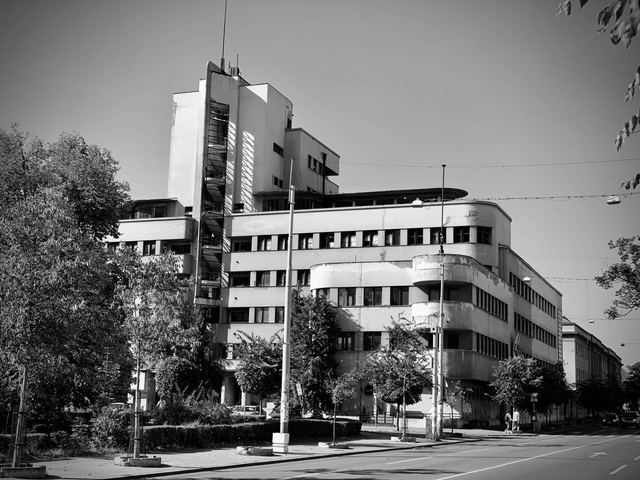 Brašovan’s modernist iconAir Force Command Building, ZemunBrašovan’s 1935 Air Force Command Building in Zemun, a modernist landmark.
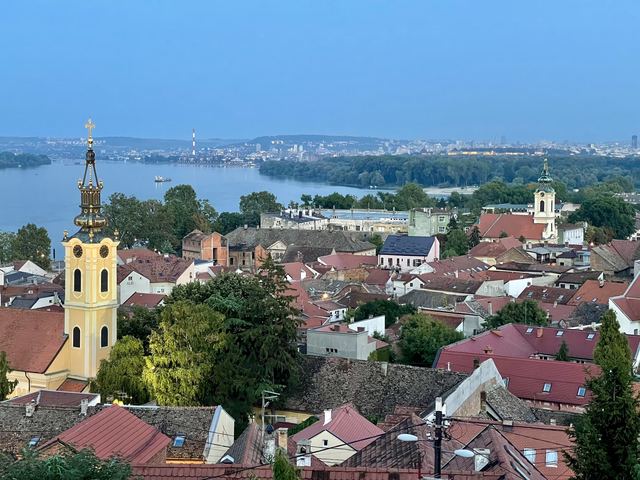 A Habsburg town on the DanubeA walk through old ZemunA little Central European town of Baroque churches and cobbled lanes on the Danube.