The best view over the Danube
Zemun & Gardoš Tower
Gardoš Tower of 1896, with one of the finest views over Zemun, the Danube and Belgrade.

Photo Credit
Image courtesy of © Petar Milošević · CC BY-SA 4.0 via Wikimedia CommonsGardoš Tower, built in 1896 on the ruins of a medieval fortress at the top of old Zemun, is the town’s great landmark, and the view from its hill over the red roofs of Zemun, the Danube and Belgrade in the distance is one of the finest in the city.
The back story
Gardoš is the hill where Zemun began. Romans built Taurunum here, a fort and harbour for their Danube fleet, and in the Middle Ages a fortress crowned the hill, guarding the crossing between Hungary and the Balkans. The great Hungarian commander John Hunyadi, who defended Belgrade against the Ottoman army in 1456, died in the fortress a few weeks after his victory.
Only its angular towers and parts of its walls survive, scattered around the hilltop.
For almost two centuries Zemun was the southern frontier of the Habsburg Empire, facing Ottoman and then Serbian Belgrade across the rivers. In 1896 Hungary celebrated a thousand years since the Magyars settled the Pannonian plain, and among its millennium monuments were towers at the edges of the kingdom. Gardoš Tower, the southernmost, was completed on 5 August 1896 and opened on 20 August: a full stop in brick at the bottom of the map.
The tower
Designed by Hungarian architects and built of sandstone and brick, the tower is 36 metres tall, a romantic mix of styles with a tall pointed roof and slender corner turrets. An eagle once stood on top, and a lion with a coat of arms guarded each terrace; only one lion survives. Locals soon called it the Tower of Sibinjanin Janko, as John Hunyadi is known in Serbian epic poetry, and many still do.
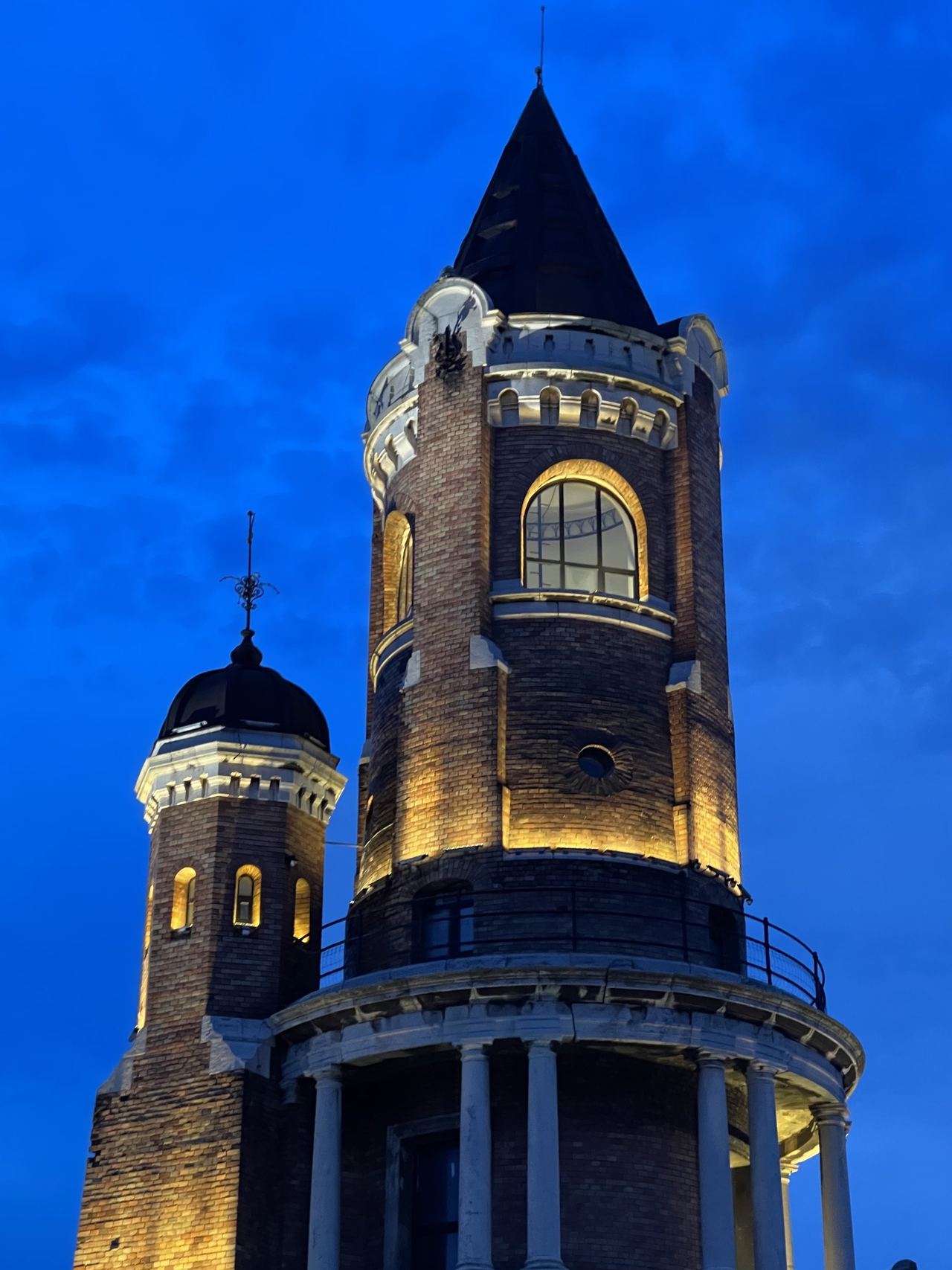
Photo Credit
Image courtesy of © ULTIMATE International MediaIt has had a hard life. The tower was badly damaged in the fighting of 1914, renovated between the wars and again in 1962, and for decades Zemun’s firemen used it as a lookout. By 2006 it stood empty and abandoned, until the gallery owners Borka and Đorđe Čubrilo cleaned it out, rebuilt its floors, stairs and terraces from the original plans of 1896, and turned it into an art gallery. The tower is part of the protected Zemun fortress and old town.
The view
Climb the narrow lanes from the quay and you reach the top of Gardoš to one of the great views of Belgrade. Below you is a sea of red roofs and church towers, the old fishing town tumbling down to the water. Beyond it the Danube spreads wide and slow, and the river is always busy: long white river cruise ships gliding between Vienna, Budapest and the Black Sea, yachts and motorboats, rowing boats and working barges pushing gravel and grain.
Downstream lie Great War Island and the confluence with the Sava, and in the distance the cranes and towers of New Belgrade and Belgrade Waterfront, with the Belgrade Fortress on its ridge across the water. From the top terrace of the tower the view opens even further, across the plains of Srem.
The Zemun Quay and its swans
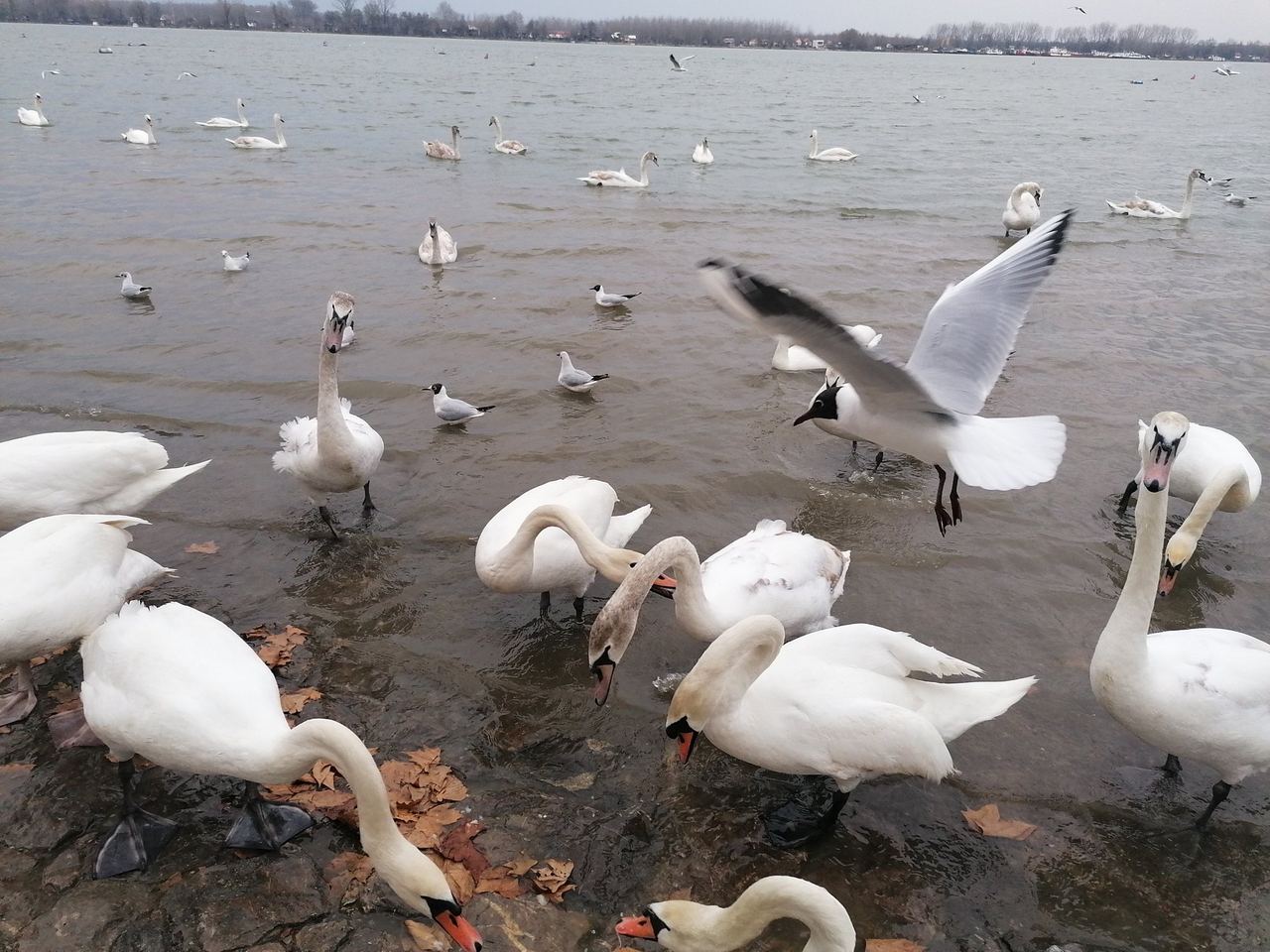
Walk back down to the Zemun Quay, the long riverside promenade below Gardoš. It is home to the largest flock of mute swans in Belgrade: more than 120 of them gather in one stretch of the river by the Venecija restaurant, gliding along the water’s edge and crowding by the steps. It is a beautiful sight, and one that Zemun families have loved for generations.
As the sun goes down behind Zemun, the Danube turns from gold to crimson.
Across the water lies Great War Island, a wild, wooded island protected as a nature reserve since 2005. Almost 200 species of bird have been recorded here, among them the white-tailed eagle, Europe’s largest eagle with a wingspan of more than two metres, which nests on the island in the heart of the capital, as well as the pygmy cormorant, the black stork, seven species of heron and dozens of species of duck.

Photo Credit
Image courtesy of © Petar Milošević · CC BY-SA 4.0 via Wikimedia CommonsSunset on the Danube
Along the quay, fish restaurants, cafés and bars sit beside the promenade and on floating terraces on the water, from Venecija, a Zemun institution since 1913 with its terrace over the Danube and a gondola moored outside, to classic fish houses such as Šaran and Stara Carinarnica, in the old customs house, and Reka with its live music.
As the sun goes down behind Zemun, the Danube turns from gold to crimson and the lights of Belgrade come on across the river. Take a table by the water, order the fish of the day and watch: it is one of the most romantic evenings Belgrade has to offer.

Photo Credit
Image courtesy of © Lukder · CC BY-SA 4.0 via Wikimedia CommonsVisiting
The tower stands at the top of Gardoš, a ten-minute walk up the steps and cobbled lanes from the quay or from Zemun’s main street; it is usually open as a gallery during the day, and the hilltop and its views are free at any hour. Go in the late afternoon, then walk down to the quay for sunset.
Our advice: walk along the Danube from New Belgrade, climb Gardoš for sunset, and stay for fish by the river.
Why it's on our list
- Built in 1896 for the Hungarian millennium
- Panoramic views of the Danube
- Old Zemun’s cobbled lanes
- Sunsets over the river
Location
The map comes from Google Maps, which sets its own cookies once it loads.
More in depth
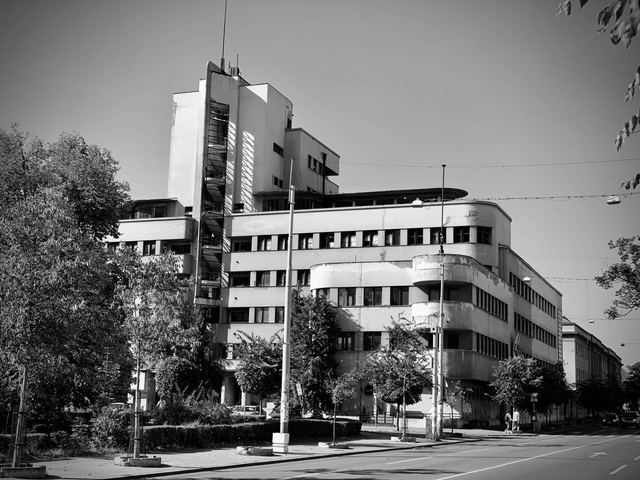 Brašovan’s modernist iconAir Force Command Building, ZemunBrašovan’s 1935 Air Force Command Building in Zemun, a modernist landmark.
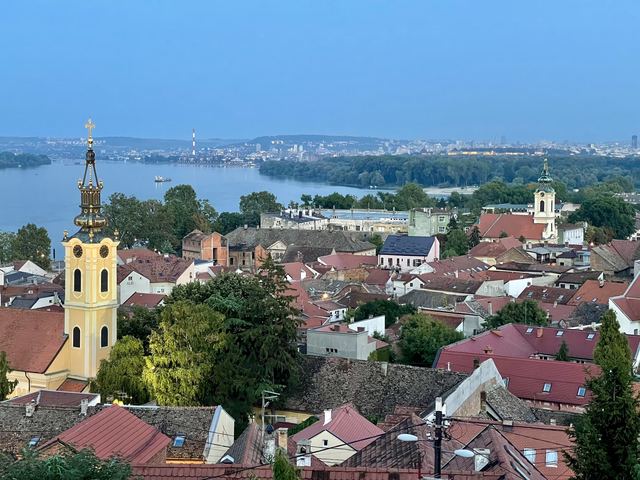 A Habsburg town on the DanubeA walk through old ZemunA little Central European town of Baroque churches and cobbled lanes on the Danube.
 Our ten favouritesTen of the best in ZemunOur ten favourite places in Zemun, from the green market to Gardoš Tower.